
How Can Buyers Verify Packaging Machinery Spare Parts Availability?
How do I verify packaging machinery spare parts availability? Buyers need documented evidence of stock, lead times, compatibility, service capacity, and logistics performance before approving equipment purchases.
A supplier catalog is only an initial reference. It does not confirm whether a critical sealing jaw, servo drive, sensor, belt, or gearbox is available when production stops.
For procurement leaders, maintenance managers, and plant owners, spare parts verification is an uptime decision. It determines whether a packaging line remains productive or becomes an expensive bottleneck.
Start With the Parts That Can Stop Production
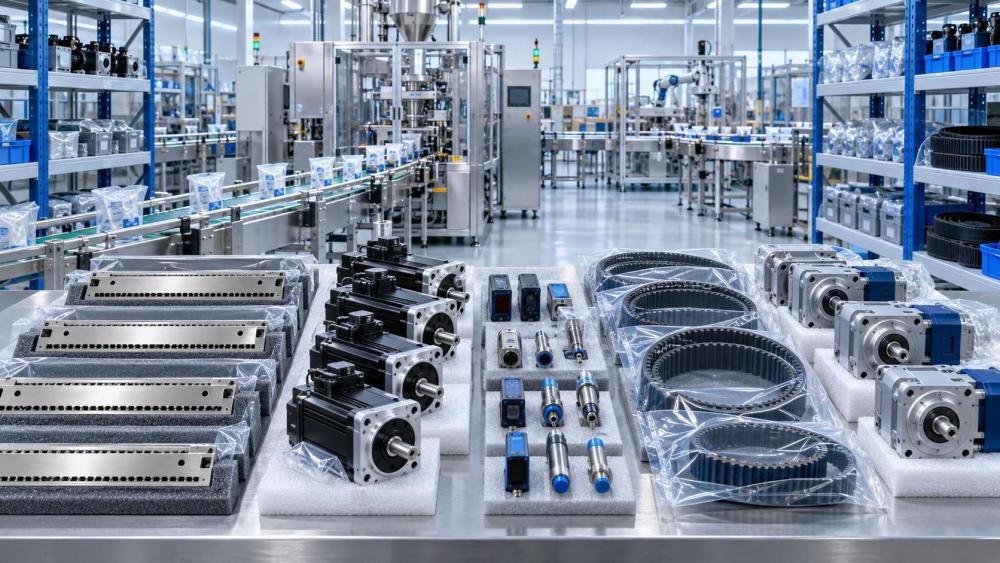
Buyers should first identify critical spare parts rather than requesting an undifferentiated inventory list. Criticality depends on failure impact, replacement difficulty, and the availability of alternatives.
Typical high-risk items include PLC modules, servo motors, touchscreen panels, pneumatic valves, custom forming parts, cutting assemblies, sealing components, and machine-specific electronic control boards.
Ask the supplier to provide a recommended critical spare parts list for the exact machine model, speed range, package format, and production environment under consideration.
The list should classify each item by operational importance. A practical classification includes production-stopping parts, performance-reducing parts, wear items, and routine maintenance consumables.
Production-stopping parts deserve the strongest verification. If failure prevents operation entirely, buyers should confirm stock location, quantity, replenishment time, and emergency delivery options before ordering machinery.
Wear parts also matter because their replacement is predictable. Belts, blades, bearings, heating elements, springs, rollers, and sealing strips should have clear replacement intervals and standard pricing.
Custom components require additional scrutiny. If a part is manufactured only for one machine design, buyers must understand tooling requirements, production lead times, and minimum order quantities.
Request the machine’s bill of materials for serviceable components, including manufacturer names, part numbers, revision numbers, technical specifications, and any approved substitute parts.
This documentation allows maintenance teams to compare supplier claims with their own risk assessment. It also prevents confusion when parts are renamed after equipment upgrades.
Ask for Evidence of Real-Time Inventory, Not General Assurances
The most useful question is not whether spare parts are “available.” Buyers should ask which specific items are currently stocked, where they are stored, and how quantities are updated.
A credible supplier can usually provide an inventory report for requested critical parts. The report should show part numbers, quantities, warehouse location, and expected replenishment dates.
Inventory information should distinguish between physically available stock, inbound stock, reserved stock, and parts that must be manufactured after an order is placed.
Physical stock is the strongest condition because it can be dispatched immediately. Inbound inventory may still be delayed by customs clearance, shipment changes, or supplier allocation decisions.
Buyers should also ask whether reported inventory is dedicated to existing customers. A part shown in a warehouse may be contractually reserved for another installed machine base.
For high-value production lines, request a sample parts availability report before signing the equipment contract. This reveals how organized the supplier’s after-sales system actually is.
Some suppliers operate regional warehouses, while others ship every component from one factory location. Regional stock generally improves response times, especially for facilities operating continuous shifts.
Buyers should verify warehouse claims independently when possible. Ask for warehouse addresses, local service contacts, dispatch procedures, and examples of recent deliveries to comparable markets.
If a supplier cannot provide item-level inventory information, treat that as a procurement risk. The absence of data often indicates weak parts planning or limited service infrastructure.
Confirm Lead Times Under Normal and Emergency Conditions
Lead time should be measured from the customer’s purchase request to delivery at the plant, not simply from the supplier’s order confirmation to warehouse dispatch.
Ask for separate lead times for stocked parts, imported parts, manufactured parts, discontinued parts, and emergency shipments. Each category carries a different level of operational risk.
Normal delivery times are useful for planned maintenance. Emergency delivery performance matters more for unexpected breakdowns that halt filling, wrapping, labeling, cartoning, or palletizing operations.
Buyers should ask how emergency orders are handled outside local business hours. Packaging plants frequently operate evenings, weekends, and holidays when standard support channels may be unavailable.
A strong service organization defines its escalation process. It should identify response contacts, technical approval steps, courier arrangements, export documentation responsibilities, and expected shipment cut-off times.
Lead-time claims should be supported with historic evidence. Request examples of recent critical-part orders, including inquiry date, dispatch date, transit method, and customer delivery date.
International buyers should calculate customs and import delays separately. A supplier can dispatch quickly while the buyer still waits days for clearance, duty processing, or local transport.
Consider building contract language around maximum response commitments for selected critical parts. Service-level expectations are more useful when they specify measurable response and dispatch obligations.
For critical lines, a consignment inventory arrangement may be appropriate. The supplier holds approved parts at the buyer’s site, and payment occurs only when items are used.
Verify That Every Part Is Compatible With Your Exact Machine Configuration
Part availability has little value when the delivered component does not match the installed machine. Compatibility errors can extend downtime and create avoidable return-shipping costs.
Packaging machinery often changes through software updates, electrical revisions, safety modifications, tooling changes, and substitutions made during manufacturing. Model names alone may be insufficient for identification.
Buyers should provide the supplier with machine serial numbers, electrical specifications, control platform details, packaging formats, and photographs of relevant identification labels before ordering components.
Ask whether the supplier uses serial-number-based parts lookup. This is more reliable than selecting components solely through product category, visual similarity, or generic model descriptions.
For electronics, confirm firmware and software compatibility. A replacement drive, HMI, PLC, or motion controller may require parameter files, licenses, or programming support before use.
Mechanical replacement parts also need verification. Forming tubes, sealing jaws, knives, guides, and transfer systems must match product dimensions, film type, speed requirements, and installed tooling.
Request written confirmation that every quoted critical part is compatible with the proposed machine configuration. The confirmation should include a revision identifier wherever applicable.
Buyers should ask whether the supplier supports obsolete parts through repair, remanufacturing, upgrade kits, or approved replacements. Obsolescence planning becomes essential during long equipment lifecycles.
A practical spare parts strategy includes version control. Maintain records of every machine modification so future procurement teams can identify the correct replacement without relying on memory.
Evaluate the Supplier’s Service Network and Technical Capability
Spare parts availability is not only a warehouse question. Buyers also need a supplier able to diagnose failures, identify correct components, and guide installation safely.
Ask whether the supplier has local technicians, authorized agents, remote support engineers, or regional service centers. Service coverage should align with the machine’s operating country and language requirements.
Technical response is especially important for electronic failures. Replacing a component without proper configuration can create safety faults, communication errors, or poor machine performance after restart.
Buyers should confirm support hours, response targets, remote access capabilities, and escalation channels. A general sales email address is not an adequate emergency support system.
Request technician qualification details for complex equipment. Relevant expertise may include automation controls, food safety requirements, hygienic design, film handling, servo motion, and packaging line integration.
It is also useful to ask whether local engineers carry common spare parts. Field stock can reduce downtime when a component is needed before warehouse delivery is possible.
Review customer references from plants with similar production conditions. Ask specifically about parts delivery accuracy, technical diagnosis quality, warranty handling, and response during urgent stoppages.
Supplier service capacity should be evaluated before equipment installation. After commissioning, buyers have less negotiating leverage and may discover support limitations too late.
For multinational operations, assess whether the supplier can support every plant consistently. A reliable partner should explain regional differences in stock, service resources, and import procedures.
Assess Logistics, Documentation, and Commercial Terms
Global logistics can determine whether an available spare part reaches the factory in time. Buyers should verify shipping methods, export experience, customs documentation, and local delivery partners.
Ask which Incoterms apply to routine and emergency shipments. Responsibility for freight, insurance, export clearance, import clearance, and taxes should be clear before a breakdown occurs.
Packaging machinery parts may require special handling because of size, weight, batteries, electronics, lubricants, or fragile precision surfaces. Confirm packaging standards and transit protection methods.
Buyers should request the supplier’s documentation process for commercial invoices, packing lists, certificates of origin, technical descriptions, and customs codes used for common spare parts.
Incomplete documentation can delay urgent shipments even when parts leave the warehouse promptly. This risk is particularly relevant for cross-border deliveries into tightly regulated markets.
Commercial transparency also matters. Request a current spare parts price list, discount structure, freight estimate approach, warranty terms, and repair-versus-replace options for major components.
Beware of unusually low machine prices paired with high spare parts pricing. The total cost of ownership depends on both equipment acquisition and lifetime maintenance expenditure.
Buyers should ask whether prices are fixed for an agreed period. Predictable pricing supports maintenance budgeting and reduces exposure to sudden costs during emergency purchasing.
For strategic equipment, include spare parts obligations in the purchase contract. The agreement should address availability periods, discontinued components, technical support, documentation, and response expectations.
Build a Spare Parts Verification Checklist Before Purchase Approval
A formal checklist helps procurement, engineering, production, and maintenance teams evaluate suppliers using the same criteria. It also creates a documented basis for investment approval.
The checklist should identify critical components, confirmed stock quantities, warehouse locations, normal lead times, emergency lead times, compatibility records, and required technical support for installation.
Include a review of recommended startup spare parts. These are components buyers should purchase with the machine to cover early operation, training, commissioning, and initial maintenance needs.
Buyers should compare the supplier’s recommendation with their own maintenance strategy. A high-output facility may need more on-site stock than a lower-volume operation with flexible production schedules.
Also evaluate the installed base for the machine platform. A widely deployed system may have better long-term parts support, while highly customized equipment may require deeper inventory planning.
Ask the supplier to explain its product lifecycle policy. Buyers need to know how long parts remain supported after a machine model is updated or removed from new sales.
Document every commitment in writing. Verbal assurances from sales representatives are difficult to enforce after ownership transfers to service, logistics, or regional distributor teams.
Finally, assign internal ownership for spare parts data. Maintenance teams should update stock levels, failure history, approved suppliers, and machine revisions throughout the equipment lifecycle.
When buyers ask, “How do I verify packaging machinery spare parts availability?” the strongest answer is a documented, machine-specific review rather than a simple catalog check.
Conclusion: Treat Parts Availability as an Uptime Investment
Packaging machinery spare parts availability should be evaluated before equipment selection, not after a production failure. Real inventory, lead times, compatibility, service, and logistics must all be verified.
Buyers that request evidence, compare service capability, and contract for critical support are better positioned to protect output, reduce downtime costs, and maintain predictable production schedules.
The right supplier does more than sell machinery. It provides a practical long-term parts strategy that supports the buyer’s operational goals throughout the machine’s working life.
Related News
- Commercial Insights on Global Emerging Markets in PrintMay 14, 2026Global emerging markets insights for print businesses: discover high-potential segments, entry strategies, and risk signals to improve timing, reduce uncertainty, and win faster in growth markets.
- Greening Manufacturing: Which Projects Pay Back Faster?May 14, 2026Greening manufacturing projects that pay back fastest often cut energy, waste, and downtime in 6–24 months. See which upgrades finance teams should approve first.
- What turnaround time should you expect from a direct mail printing supplier?Sep 17, 2026Direct mail printing supplier turnaround times explained: learn the key stages, delay risks, and planning tips for reliable, on-time campaign delivery.
- How to use a construction solution reference to compare project optionsSep 16, 2026Construction solution reference: learn how to compare project options by cost, schedule, interfaces, compliance, and lifecycle risk for confident, defensible decisions.