
Millar Western Forest Products has announced that it will indefinitely idle its Quesnel River Pulp mill in British Columbia, Canada, citing weak market conditions and uncertainty over fibre supply. The mill has annual capacity of 375,000 air-dried metric tonnes of softwood pulp, and approximately 90 jobs will be affected.
The decision places a substantial amount of production capacity on hold for an unspecified period. Its wider effect will depend on how long the mill remains idle and whether other pulp supplies are available to customers that would otherwise have relied on its output.
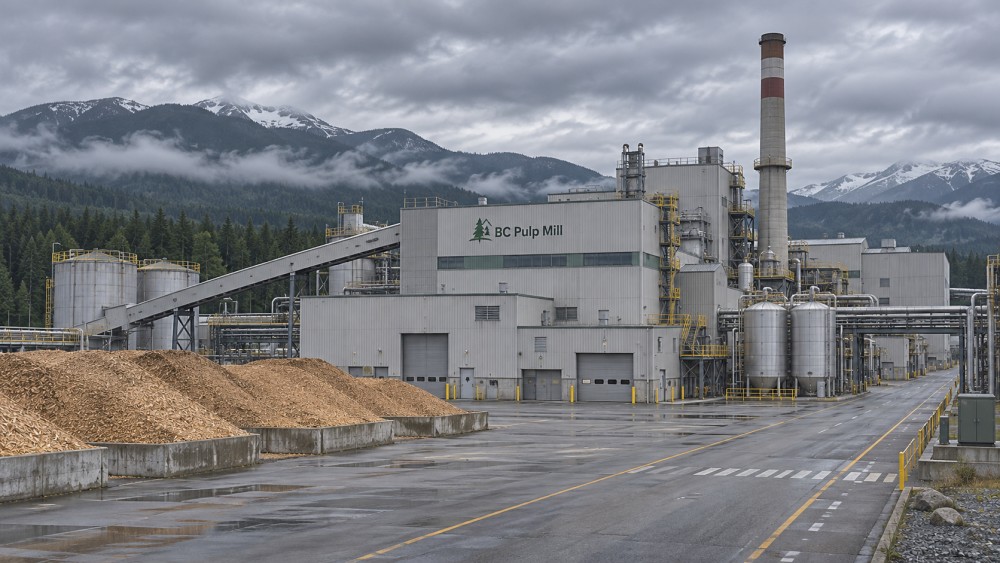
What an indefinite idling means for supply
Indefinite idling means there is no stated date for the mill to resume operations. It does not, by itself, establish that the facility will close permanently. The distinction matters for businesses assessing supply: the duration of the interruption remains an important variable, as does the timing of any eventual restart.
The mill's stated capacity describes how much pulp it can produce in a year; it should not be treated as a measure of the volume that would otherwise have been produced or sold during the idle period. The effect on available supply will depend on the length of the stoppage and the mill's production and inventory position when operations are idled.
For customers linked to the facility, the immediate commercial question is how deliveries will be managed during the interruption. Depending on their arrangements and available inventories, they may need to assess alternative sources or delivery schedules. The announcement alone does not establish whether particular customers will face shortages or delays.
Market weakness and fibre uncertainty
Millar Western identified two reasons for its decision: weak market conditions and uncertainty over fibre supply. Together, they point to pressure on both the commercial environment for pulp and the availability of a key production input. The announcement does not specify how much each factor contributed to the decision.
Fibre supply is relevant because a pulp mill needs a dependable flow of raw material to operate. Uncertainty about that flow can complicate production planning, while weak market conditions may affect the commercial case for continuing to run the facility. The relationship between those pressures and a future restart will depend on how conditions develop.
Jobs and the outlook for the mill
Approximately 90 jobs will be affected. The announcement establishes the scale of the employment impact but does not describe the arrangements for individual workers or how long those effects will last.
Further company announcements on the mill's operating status and fibre supply would help clarify the outlook. For the pulp supply chain, the most consequential question is whether the idling proves temporary or continues for an extended period; for now, there is no stated restart date.
Want to dive deeper into these market dynamics, or need data-driven support for your next business move? Drop a line below and let the analysts at GSI-Matrix provide customized insights.
“We respect your privacy. Your information is strictly confidential.”
Related News
- Kraft Pulp Price Falls to 4,570 per Tonne on November 20Nov 21, 2026Kraft pulp price fell to 4,570 per tonne on November 20, down 0.39% for the day. Explore the latest benchmark trends and what they may mean for buyers and sellers.
- China: Imported Softwood Pulp Rises Slightly as Corrugated Paper FallsNov 14, 2026China's imported softwood pulp prices rose 0.5% as corrugated paper fell 2.2% in early November 2026. Explore the figures and what businesses should watch.
- Millar Western to Indefinitely Idle Quesnel River Pulp MillNov 11, 2026Millar Western will indefinitely idle its Quesnel River Pulp mill, affecting 90 jobs. Explore the reasons and potential supply implications.
- How automated pulp processing reduces variation in kappa numberOct 27, 2026Discover how automated pulp processing reduces kappa number variation through reliable measurements and predictive control. Learn what to evaluate for consistent quality and stronger mill performance.