
Before a tender is issued, the specification must turn a production requirement into testable obligations. A request such as “high-output converting line,” “energy-efficient dryer,” or “automated packaging system” is too open to comparison. It allows each bidder to interpret capacity, quality, automation, and scope differently. The result is an apparently competitive tender in which prices cannot be compared on the same technical basis.
Equipment selection and technical specs drafting should therefore begin with the operating condition the equipment must sustain, not with a preferred machine layout or a supplier brochure. Define the material entering the process, the required output leaving it, the operating window between them, and the interfaces that determine whether the equipment can work as part of the wider line.
Start with the duty point, not the nameplate rating
Rated capacity is often the most visible figure in a proposal and one of the easiest to misunderstand. A machine may achieve its maximum speed only with a narrow material range, reduced inspection requirements, short runs, or a favorable product format. The tender should identify the required sustained duty point: output, product range, quality condition, and operating duration that must be achieved together.
For a printing or coating process, this could mean web width, substrate type, thickness range, ink or coating system, target line speed, permitted registration variation, and drying condition at rewind. For a papermaking auxiliary system, it may include stock consistency, temperature, fiber characteristics, contamination level, throughput, and discharge quality. In packaging, product dimensions alone are insufficient; pack pattern, orientation, infeed stability, film or board properties, changeover frequency, and rejected-product handling can alter the practical output substantially.
A useful specification distinguishes three production figures:
- Design capacity, used to size principal equipment, utilities, structures, and downstream handling.
- Guaranteed capacity, stated under defined feedstock, product, quality, and environmental conditions and linked to acceptance testing.
- Operational range, showing the lowest and highest stable production conditions, including limitations on speed, product size, moisture, viscosity, basis weight, or material strength.
These figures should never be left as a single number without the conditions behind them. A line that reaches the stated output only after extended tuning, with a restricted product mix, is not equivalent to one that maintains it across the required production envelope.
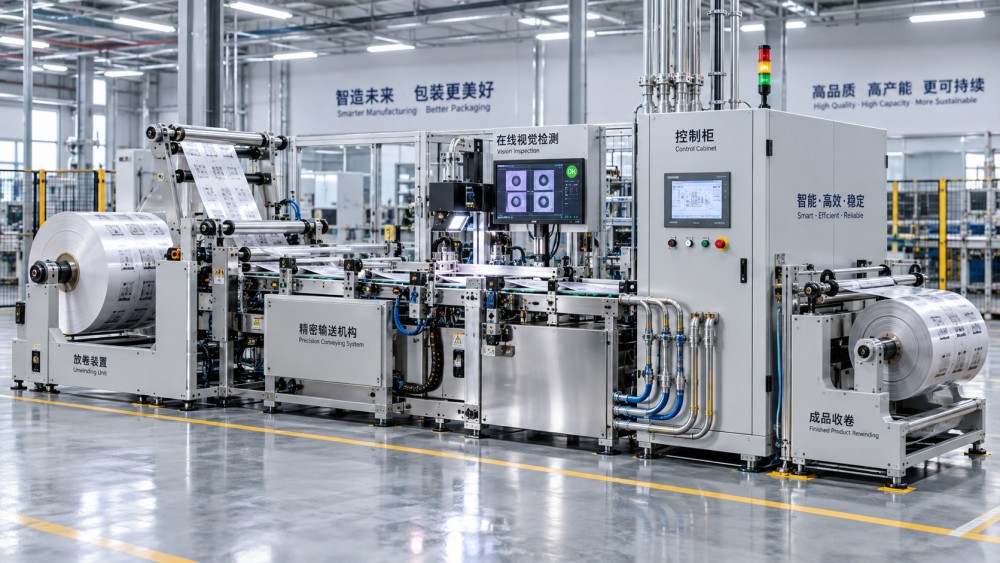
Define the process boundary before allocating equipment scope
Technical gaps often arise because the process boundary is unclear. A supplier may include the core machine but exclude feeding, discharge, dust extraction, recipe transfer, guarding, product accumulation, waste handling, or the controls needed to connect the machine to adjacent equipment. Those omissions tend to surface after award, when interfaces are expensive to redesign.
Map the line from incoming material to accepted finished output. At each handoff, state the physical condition, ownership boundary, control responsibility, and normal failure response. Material transfer is only one part of the interface. Equipment may also need utility connections, safety interlocks, control signals, product tracking data, exhaust ducting, drains, access platforms, or foundations coordinated with other packages.
The following questions expose scope uncertainty early:
- What material condition is guaranteed at the inlet: temperature, moisture, contamination, roll geometry, bulk density, viscosity, or particle size?
- Where does the equipment stop physically, and which party supplies chutes, transfer conveyors, buffer zones, cable trays, valves, or supports crossing that boundary?
- When an upstream machine slows, trips, or produces off-spec material, does the proposed equipment reduce speed, divert material, stop safely, or continue into a buffer?
- Which system owns product identification, batch records, quality alarms, and production counts when data is exchanged between several machines?
For continuous processes, upstream instability is particularly important. A machine sized only for average feed can perform poorly where incoming flow pulses, roll tension varies, or material properties change through a shift. The specification should require the relevant buffering, measurement, and control response rather than assuming the core machine absorbs all variation.
Specify product quality as measurable acceptance criteria
Quality requirements should describe the output condition, measurement method, sampling point, and treatment of nonconforming product. Broad statements such as “high-quality finish,” “uniform coating,” or “accurate cutting” do not create an enforceable benchmark. They also invite proposals based on incompatible inspection methods.
For dimensional work, define the critical dimensions, tolerances, reference datums, sample size, and instrument or gauge method. For printing, color targets, registration, drying, defect detection coverage, and substrate-related limits need separate treatment because they arise from different mechanisms. A color issue may originate in ink formulation, measurement geometry, substrate absorbency, drying, or press stability; it should not be written as a vague requirement for “color consistency.”
Where visual defects matter, classify them by type and location. Creasing at a packaging seal, edge damage at a rewound roll, pinholes in a coating, or surface marks after calendaring are not interchangeable defects. The tender can define allowable defect classes and the detection or rejection functions required, while preserving room for bidders to propose the appropriate sensing arrangement.
Acceptance criteria also need a production-state definition. Startup scrap, material required for calibration, and output generated while the process is stabilizing should not be silently counted as conforming production. State when the test begins, how long it runs, which product mix applies, and what conditions invalidate or repeat a test.
Use material ranges that reflect the difficult end of production
Equipment is commonly selected around nominal material properties, while performance problems emerge at the edges of the actual range. A feeder that works with rigid, uniform cartons may struggle with warped board. A web handling system that runs smoothly on a strong film may lose tension control on a thin extensible substrate. A cutter suitable for dry sheet stock may not meet edge-quality expectations when moisture or adhesive content changes.
List the material characteristics that influence machine behavior, not merely the commercial product names. Depending on the process, this may include thickness, basis weight, tensile behavior, surface treatment, coefficient of friction, moisture, dust generation, temperature, density, fold memory, adhesive tack, particle abrasion, or corrosive constituents. Identify which materials are routine, which are occasional, and which represent the limiting condition for speed, accuracy, wear, or cleaning.
There is a practical distinction between a machine that can process a material and one that can process it at the required output and quality. Tender documents should ask bidders to declare any reduction in speed, automation level, maintenance interval, reject rate, or utility consumption associated with material extremes. This converts a hidden operational compromise into a comparable tender qualification.
Write utilities and site conditions as engineering inputs
Utility requirements affect both feasibility and lifecycle cost. Electrical supply should state voltage, frequency, earthing arrangement, available fault level where relevant, and site rules for panel design. Compressed air needs pressure, quality, dew point, and peak demand, because nominal air consumption alone does not reveal whether actuators and pneumatic controls will remain stable during rapid cycling. Steam, chilled water, process water, gas, vacuum, thermal oil, and extraction systems require equivalent detail.
Ambient conditions should cover the factors that affect equipment reliability or product quality: temperature range, humidity, dust, washdown exposure, altitude, vibration, and corrosive atmosphere where applicable. A control enclosure designed for a clean conditioned room may be unsuitable near fiber dust, solvent vapor, wet cleaning, or outdoor loading zones. The requirement is not to prescribe every component, but to make the duty environment explicit so bidders cannot price against an easier condition.
Installation constraints deserve the same precision. Include available floor load, clear height, column locations, access route dimensions, lifting restrictions, foundation information, drainage, equipment-room space, and permitted shutdown windows. Large modules may fit the final footprint yet be impossible to move through the building or position beneath existing services. Where site data are preliminary, identify the assumptions that bidders must validate during detailed engineering.
Separate automation functions from communications claims
“Fully automatic” has little value unless the required functions are defined. Automation may refer to automatic feeding, recipe selection, format change, splice handling, cleaning cycles, fault recovery, quality adjustment, pallet exchange, or production reporting. Each function has a different impact on staffing, availability, safety, and line balance.
Describe the expected operating modes: production, setup, cleaning, maintenance, manual jog, controlled shutdown, emergency stop, and restart after power loss or material break. State which functions require authorization, what information must remain available after a restart, and how the equipment handles incomplete product or material already in process.
Integration specifications should identify signal categories and responsibility, not simply demand “compatibility.” Define the required exchange of start-permit status, speed reference, fault state, emergency-chain condition, product or batch identifier, recipe parameters, quality result, counters, and maintenance alarms. If the machine is expected to connect to supervisory software, specify available interfaces, data ownership, timestamp expectations, required tags, and any restrictions on remote access. A data connection without defined semantics often produces dashboards that display values yet cannot support traceability or reliable production reconciliation.
Make safety, hygiene, and maintainability part of the equipment definition
Safety requirements must fit the process rather than being appended as generic wording. Guarding may need to accommodate frequent web threading, roll changes, knife replacement, washdown, jam clearance, or access to heated surfaces. If access is routinely needed during changeover, the design should provide a controlled method to perform that task instead of forcing repeated removal of guards or improvised workarounds.
For applications involving food-contact packaging, hygienic design requirements should be stated at the appropriate process boundary: cleanability, avoidance of product traps, material compatibility with cleaning agents, separation of lubricants from product areas, and controlled access to sensitive zones. These requirements differ from those for dry converting, woodworking, or brick handling equipment, where dust containment, abrasion resistance, and service access may dominate.
Maintainability can be specified through access and service requirements without dictating a particular design. Require clear access to wear components, safe isolation points, lubrication provisions, lifting arrangements for heavy assemblies, diagnostics for critical drives and sensors, and a spare-parts recommendation tied to commissioning and early operation. Ask for expected consumables and wear parts by function, alongside the conditions that accelerate replacement. A wear claim has little meaning when it omits abrasive materials, cleaning chemicals, duty cycle, or product variation.
Compare lifecycle obligations, not only initial supply price
A technically acceptable offer can still differ materially in energy use, consumables, planned maintenance burden, change parts, required utilities, and dependence on proprietary components. These factors should be requested in a consistent schedule so that they can be evaluated against the same operating assumptions.
Do not combine all downtime into a single availability figure. Planned cleaning, scheduled maintenance, product change, lack of material, utility failure, control fault, and mechanical breakdown have different causes and different contractual treatment. The tender should state which events are within the equipment guarantee and which site conditions must be provided for the guarantee to apply.
Control ambiguity through tender deliverables
The technical specification should require evidence before award, not merely promises after contract signature. Relevant deliverables may include a general arrangement drawing, utility schedule, process flow description, interface list, control architecture, safety concept, material compatibility statement, proposed acceptance-test procedure, commissioning plan, and exceptions register. The exceptions register is especially important: every departure from the requirement should be visible in one place rather than buried across commercial notes and technical appendices.
Bid comparisons become clearer when each requirement is marked as compliant, compliant with stated limitation, alternative offered, or excluded. A blank response should not be treated as compliance. Where a bidder proposes a different technical route, require an explanation of the impact on output, quality, integration, utilities, maintenance, and acceptance testing.
A tender is ready when it allows competing designs where they are genuinely acceptable, while fixing the operating conditions and evidence needed to prove suitability. That balance avoids unnecessary design prescription without transferring unresolved engineering decisions into the contract stage.
Related News
- Commercial Insights on Global Emerging Markets in PrintMay 14, 2026Global emerging markets insights for print businesses: discover high-potential segments, entry strategies, and risk signals to improve timing, reduce uncertainty, and win faster in growth markets.
- Greening Manufacturing: Which Projects Pay Back Faster?May 14, 2026Greening manufacturing projects that pay back fastest often cut energy, waste, and downtime in 6–24 months. See which upgrades finance teams should approve first.
- Choosing food safety compliance training programs for audit readinessOct 20, 2026Compare food safety compliance training programs for audit readiness. Learn how to verify practical skills, assess providers, and secure traceable records before you invest.
- How to select industrial components for heavy-duty shock loadsOct 18, 2026Select industrial components for heavy duty use with confidence. Learn how to assess shock loads, compare ratings, and verify assemblies to reduce damage and costly downtime.